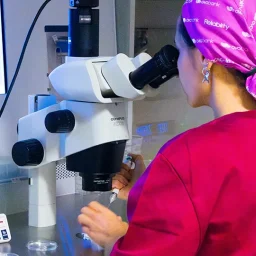


Imagine that your dream is to be a mother, that your goal is to raise a family full of love and happiness. But one day you find out that you are a carrier of a genetic disease or mutation that could affect your baby. It is at this point that feelings of fear, frustration and even despair arise as your dream intangibly fades away.
This is a sensitive debate for many couples. Fortunately, however, scientific advances have meant that what was once an insurmountable barrier is now just a small obstacle that can be overcome thanks to assisted reproduction.
Since ancient times, genetics has always been seen as an unchanging world. Nothing and no one, regardless of scientific advances, could cope with genetics. A then unexplored field that left doubts.
After many studies and scientific trials, reproductive medicine today makes it possible to make decisions to conceive safely. In other words, thanks to the development of advanced techniques, many couples who had any hereditary disease can conceive with the peace of mind that they will not transmit diseases to their children. Therefore, to commemorate World Rare Disease Day, we will discuss the most important innovations in this field.
Preimplantation Genetic Diagnosis (PGD): a ‘bodyguard’ for DNA
Preimplantation genetic diagnosis (PGD) is a form of early diagnosis that was developed thanks to the appearance of assisted reproduction techniques that we know today as In Vitro Fertilisation (IVF) and Intracytoplasmic Sperm Injection (ICSI), as stated in a study on ‘review of the methodology and current clinical applications’ by the Polytechnic University of Valencia. This diagnosis allows us to ‘detect monogenic diseases and chromosomal abnormalities through genetic studies. Therefore, the objective will generally be to select healthy embryos, avoiding the transmission of genetic and hereditary diseases, as well as predisposition syndromes to certain types of cancer’.
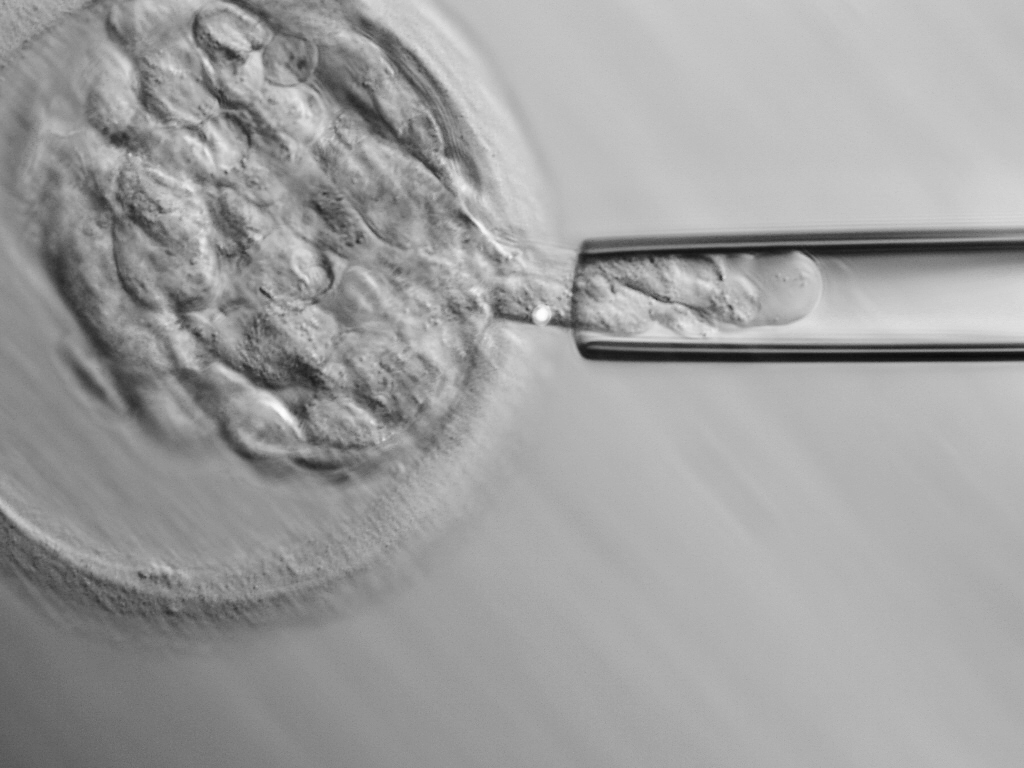
How does Preimplantation Genetic Diagnosis work?
There are several steps to carry out Preimplantation Genetic Diagnosis, which is performed during IVF treatment.
The first step is ovarian stimulation and subsequent fertilisation. The woman will receive hormonal medication with the aim of stimulating the production of eggs, i.e. that more eggs than normal are ‘made’.
Once these eggs have matured sufficiently, they are extracted and fertilised in the laboratory with the couple’s sperm or, failing that, by a donor.
After this, the next step is for the embryo to develop in the laboratory. These embryos are cultivated in the laboratory for about 5-6 days until they reach the blastocyst stage.
When the embryo reaches this stage, the embryo biopsy process is carried out. Here, several cells must be extracted from the embryo without any alteration to its evolutionary process.
With this extraction, experts in the field are able to analyse any chromosomal abnormalities or hereditary diseases carried by the embryo through genetic studies.
The last step is to select only those embryos without genetic or chromosomal alterations. Those chosen will be transferred to the uterus to achieve a safe pregnancy without the abnormality detected by the study.
Some of the diseases that can avoid being inherited are:
-Down’s syndrome
-Turner syndrome
-Klinefelter’s syndrome
-Cystic fibrosis
-Huntington’s disease
-Muscular dystrophy
-Fragile X syndrome
-Sickle cell anaemia
When can we perform a PGD?
Preimplantation Genetic Diagnosis is not mandatory in all In Vitro Fertilisation (IVF) treatments. However, it will be performed if the following specifications are met in order to avoid genetic transmission:
- Women of advanced maternal age. This means women over 35 years of age.
- Couples who, although without an apparent cause, have suffered recurrent miscarriages.
- Patients who have had several repeated implantation failures in previous In Vitro Fertilisation (IVF) cycles.
- Patients whose family history contains genetic diseases that may be hereditary.
- Men who may suffer chromosomal alterations that may affect their own spermatozoa.
A new method, ovodonation
Ovodonation is an In Vitro Fertilisation programme in which a woman acquires healthy eggs from a donor woman in order to generate embryos.
In order for this to take place safely, the donors must pass a series of tests, including psychological tests, to ensure that the oocytes are healthy and suitable for conception.
This is where epigenetics, which plays a key role in genetic development, comes into play. According to the National Human Genome Research Institute in the United States, ‘epigenetics is a field of study that focuses on changes in DNA that do not involve alterations to the underlying sequence. Certain epigenetic modifications can be transmitted from the parent cell to the daughter cell during cell division or from one generation to the next’.
Because of this technique we can alter gene expression with the promise of eradicating any kind of abnormality.
A move towards safe pregnancies
Thanks to the techniques seen above, both Preimplantation Genetic Diagnosis and Ovodonation, many couples can avoid the transmission of hereditary diseases and improve the chances of achieving a successful pregnancy, because although pregnancy is not guaranteed, the possibility of it being successful is exponentially greater.
Therefore, if you are considering fertility treatment and want to rule out any hereditary diseases, consult Ovoclinic and a specialist in assisted reproduction will inform and guide you. Scientific advances, since 1996 when PGD treatment was first performed to prevent genetic transmission, can offer you the possibility of fulfilling your dream of starting a family.