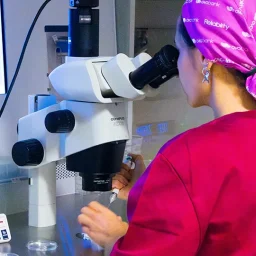


Preimplantation Genetic Diagnosis (PGD) is an advanced technique used in assisted reproduction treatments to analyze embryos before transferring them to the maternal uterus. Its aim is to detect possible genetic or chromosomal abnormalities.
PGD ANALYSIS
Within this test, there are three possible avenues of analysis:
- PGT-A: Studies aneuploidies of the embryo, which are numerical and structural chromosomal alterations that embryos may present. For example, Down syndrome, which is a trisomy of chromosome 21, and any other alterations related to chromosome number or structure. This is the most commonly performed technique, with its primary indicator related to the patient’s age, as the probability of having chromosomally altered embryos increases with age.
- PGT-M: Analyzes diseases related to mutations in a specific gene. This test is used to prevent the transmission of genetic mutations or diseases that the couple may unknowingly carry. It is only performed when a geneticist has indicated that there is a risk of the offspring inheriting the disease, and in some cases, depending on the genetic disease or mutation being studied in the embryos.
- PGT-SR: Detects structural alterations. This study is performed to analyze descendants, provided that it is known the patient has an altered karyotype (the set of chromosomes of an individual).
Therefore, this test helps increase success rates in treatments and reduce the risk of genetic or chromosomal diseases.
PGD is performed during the in vitro fertilization (IVF) process. After fertilizing the eggs in the laboratory, the embryos are allowed to develop for a few days until they reach the blastocyst stage, at which point a biopsy is performed to obtain embryonic cells for genetic analysis.
HOW IS THE PGD PROCESS CONDUCTED?
PGD is a complementary technique to in vitro fertilization (IVF) and is included in our Guarantee Programs. This technique is performed in the laboratory and requires embryos, so the first step is generating eggs for fertilization to obtain embryos.
PGD begins with controlled ovarian stimulation, which involves administering medication to induce the production of multiple eggs in the ovaries. Once the eggs reach maturity, they are extracted through follicular puncture.
The eggs obtained through this procedure are fertilized in the laboratory, either by conventional IVF or by intracytoplasmic sperm injection (ICSI). The resulting embryos are cultured until they reach the blastocyst stage, typically around five days after fertilization.
Once the embryos reach the blastocyst stage, an embryonic biopsy is performed, which involves extracting one or more cells from the embryo, usually from the trophectoderm (which will later form the placenta), using micromanipulation techniques. These cells are sent to the genetics laboratory for analysis, while the embryos are frozen awaiting the results.
WHAT IS ANALYZED IN PREIMPLANTATION GENETIC DIAGNOSIS?
The extracted embryonic cells are analyzed to detect possible chromosomal or genetic (monogenic) anomalies, such as hereditary genetic diseases (e.g., cystic fibrosis, muscular dystrophy, or hemophilia), or to evaluate chromosomal abnormalities, such as Down syndrome, Turner syndrome, or Edwards syndrome.
Genetic analysis is conducted using techniques like polymerase chain reaction (PCR), karyotype analysis, or DNA sequencing. These techniques identify possible alterations in the embryos’ genetic material, helping select those with a lower risk of transmitting genetic or chromosomal diseases to the offspring.
WHAT ARE THE ADVANTAGES OF PREIMPLANTATION GENETIC DIAGNOSIS?
PGD offers numerous advantages for people undergoing IVF treatments:
- Selection of healthy embryos: This technique allows for the selection of embryos free of genetic and chromosomal abnormalities, increasing the chances of success in assisted reproduction treatments. It reduces the risk of miscarriage, implantation failure, and genetic diseases in future children.
- Prevention of genetic diseases: PGD prevents the transmission of serious genetic diseases to the offspring, which is especially relevant for couples who are carriers of recessive genetic diseases. By selecting embryos free of these diseases, it ensures that the children can lead healthy and normal lives.
- Reduction of IVF cycles: Another significant advantage of PGD is reducing the number of IVF cycles needed to achieve a successful pregnancy. By better selecting embryos based on chromosomal information, it allows for the selection of those with the highest implantation potential, reducing the need for repeated embryo transfers. This also implies lower economic costs and less emotional stress related to these processes.
WHAT ARE THE RISKS OF PREIMPLANTATION GENETIC DIAGNOSIS?
Despite its numerous advantages, PGD also has some limitations and risks that should be considered before making a decision:
- Errors in genetic analysis: There is a possibility of errors in the genetic analysis of the embryos, which can lead to incorrect embryo selection or failure to detect certain genetic abnormalities. Although genetics laboratories are equipped with advanced technology, there is always a margin of error.
- Risk of damage during the embryonic biopsy: Although not very high, the embryonic biopsy process carries a certain risk of damaging the embryo and affecting its implantation capacity. Embryologists perform the biopsy with great care using specific laboratory techniques to reduce this risk, but complications can still arise.
- Possibility of not obtaining suitable embryos: There is a possibility of not obtaining any embryos suitable for transfer after genetic analysis, which may require new IVF cycles.